Deck Construction Overview
Deck building is an exciting project that enhances your outdoor living space and adds value to your home. With careful planning and selection of materials, you can create a beautiful and functional area for relaxation and entertaining. Whether you prefer a classic wood deck or a low-maintenance composite alternative, each option offers unique benefits to fit your lifestyle. It's important to consider factors such as layout, safety features, and local regulations to ensure a successful build that complements your home and meets your needs. With the right guidance and craftsmanship, your dream deck can become a delightful retreat for years to come.
Deck Construction Services in Manheim, PA by Fremer Construction involve the design, framing, and assembly of outdoor wooden and composite deck structures that extend usable living space beyond the interior of a residential property. Each project begins with an assessment of the intended deck location, soil conditions, elevation, and structural attachment points to the home.
Deck construction is a structural process that requires careful planning of load distribution, anchoring methods, and material selection. The goal of the construction process is to create a stable outdoor platform that is properly supported, securely attached where applicable, and aligned with the existing structure of the home. Every deck is built according to the dimensions and configuration determined during the planning phase, taking into account both ground-level and elevated installations.
The scope of work varies depending on whether the deck is freestanding or attached directly to the home’s exterior framing.
Site Preparation and Structural Layout Planning
Deck construction begins with site preparation, which ensures the ground conditions and layout markings are suitable for structural installation.
Ground Evaluation and Preparation
The installation area is evaluated for slope, soil stability, and drainage behavior. Uneven surfaces are leveled or adjusted where necessary to support proper footing placement and long-term structural balance.
Layout Marking and Dimension Setting
Deck boundaries are measured and marked based on approved dimensions. This includes outlining perimeter edges, stair locations if applicable, and structural post positions. Accurate layout marking ensures that framing aligns correctly during installation.
Permit and Code
Considerations
Deck construction work follows local building requirements, including setback distances, load requirements, and railing height regulations. Structural plans are reviewed to ensure compliance before construction begins.
Foundation and Support Structure Installation
The foundation phase establishes the load-bearing system that supports the entire deck structure. This includes footings, posts, and anchoring components that transfer weight safely into the ground.
Concrete Footings and Base Supports
Concrete footings are installed below ground level to provide stable support points for vertical posts. These footings are placed at measured intervals based on load calculations and deck size.
Post Installation and Alignment
Vertical support posts are secured to footings and aligned to maintain consistent height and spacing. Proper alignment ensures that the framing system remains level during and after construction.
Ledger Board Attachment for Home-Connected Decks
When the deck is attached to a residential structure, a ledger board is installed and secured to the home’s framing system. This component serves as the primary connection point between the house and the deck structure.
Framing System Construction
The framing system forms the main structural skeleton of the deck, supporting both weight distribution and surface materials.
Joist Installation and Spacing
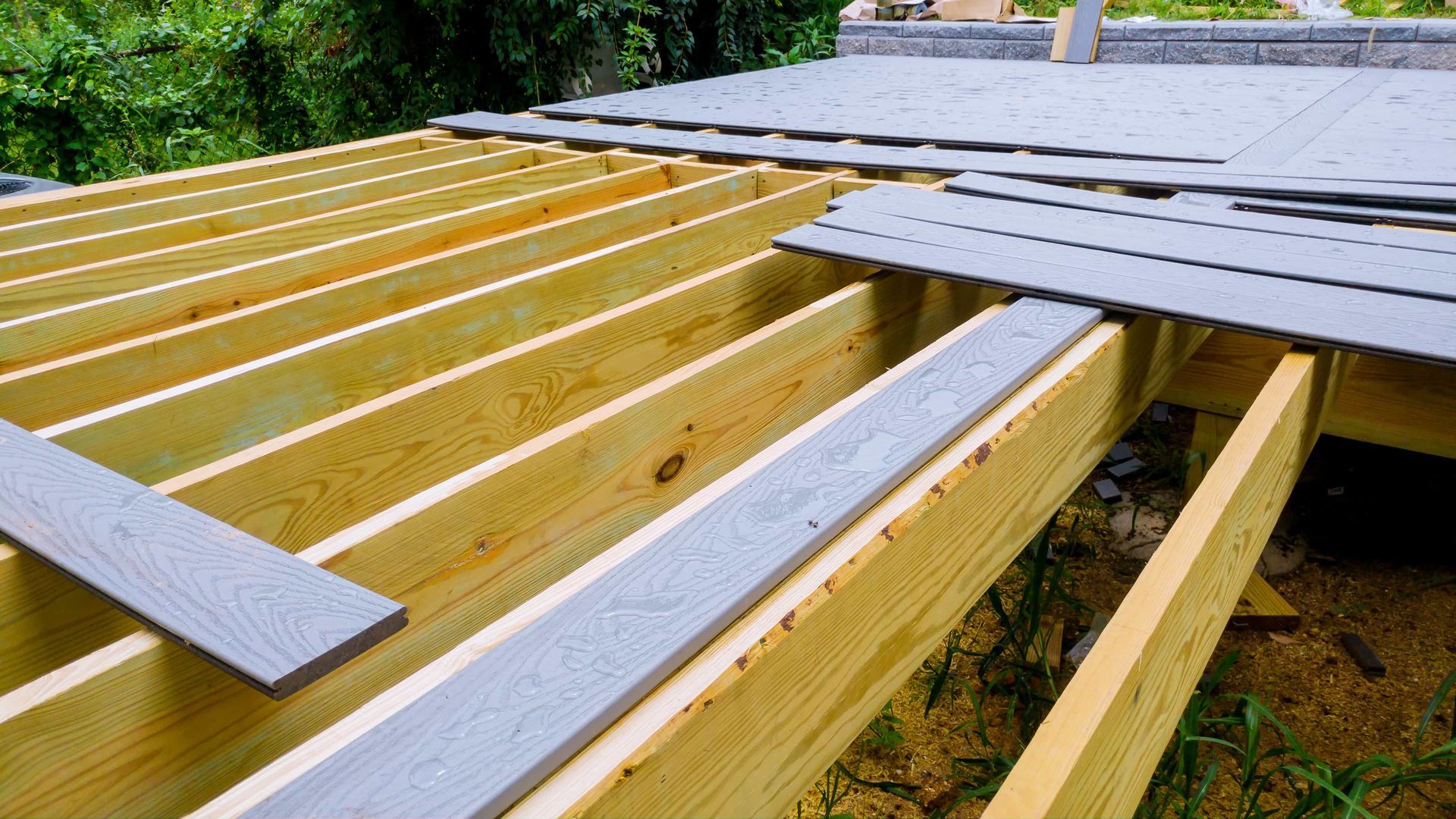
Horizontal joists are installed between beams and support posts to create the internal structural grid. Joist spacing is determined based on material type and intended load capacity.
Beam Placement and Load Distribution
Beams are positioned to carry structural weight across multiple support points. These components are secured to posts and aligned to maintain level framing across the entire deck surface.
Structural Reinforcement and Bracing
Additional bracing components are installed where necessary to reduce movement and improve long-term stability. These reinforcements help maintain structural rigidity under load and environmental exposure.
Decking Surface Installation
Once the framing system is complete, decking materials are installed to create the finished walking surface of the structure.
Board Layout and Material Placement
Deck boards are positioned across the framing system with consistent spacing to allow for expansion, drainage, and airflow. Alignment is maintained throughout installation to ensure a uniform surface appearance.
Fastening Systems and Secure Attachment
Boards are secured using mechanical fasteners or hidden fastening systems depending on material selection. Proper fastening ensures long-term stability and resistance to shifting under regular use.
Edge Trimming and Surface Alignment
Exposed edges are trimmed and aligned to match the overall perimeter of the deck. This includes adjustments around posts, stairs, and transitions to adjacent structures.
Railings, Stairs, and Access Features
Deck construction often includes access and safety components that are integrated into the structure after the main surface is installed.
Railing Post Installation and Support
Railing posts are anchored into the framing system to provide vertical support for guardrails. These posts are spaced according to structural requirements and secured for stability.
Guardrail Assembly and Panel Installation
Horizontal rails and balusters are installed between posts to create a protective barrier around elevated deck surfaces. Alignment and spacing are maintained to meet structural safety requirements.
Stair Construction and Ground Connection
Stair systems are constructed using stringers, treads, and risers that connect the deck surface to ground level. Stair placement is aligned with deck layout for safe and practical access.
Finishing Work and Structural Completion
The final phase of deck construction involves surface finishing, alignment adjustments, and structural inspection of completed components.
Surface Treatment and Protective Coating
Deck surfaces may be treated with protective finishes or sealants depending on material type. These treatments help manage exposure to weather conditions and extend structural lifespan.
Final Alignment and Structural Checks
All framing, fastening, and connection points are reviewed for alignment and stability. Adjustments are made where necessary to ensure consistent structure across the entire deck system.
Cleanup and Site Restoration
Construction debris and excess materials are removed from the site. The surrounding area is restored to a clean condition once all structural work is completed.
Deck Construction Services in Manheim, PA by Fremer Construction
focus on structured outdoor building methods, ensuring that each deck is assembled with attention to foundational support, framing accuracy, and surface integration within the residential environment.